Ingredients
Equipment
Method
Mix the Dough (Day 1 – Evening)
- In a large bowl, combine:475g bread flour314g water105g active levainMix gently using your hand or a dough whisk until no dry flour remains. Cover the bowl and let the dough rest (autolyse) for 30 minutes.
Add Salt
- Sprinkle 10g of salt over the dough. Wet your hands and gently fold the dough in the bowl to incorporate the salt fully. This may take a minute or two.
Bulk Fermentation (4–5 hours at room temp)
- Let the dough rest, covered, at room temperature (21–24°C) for 4–5 hours. Every 30–45 minutes, perform a stretch and fold: lift one side of the dough and fold it over itself. Do this 3–4 times, rotating the bowl each time. Repeat this process 3–4 times during the bulk ferment.Note: This helps build strength without kneading.
Cold Fermentation (Overnight)
- After the bulk fermentation, transfer the dough onto a lightly floured surface. Pre-shape into a round, rest for 20 minutes, then shape it again tightly into a boule.Place the dough seam-side up into a floured proofing basket or bowl lined with a tea towel. Cover and refrigerate overnight for 12–16 hours.
Preheat the Oven (Next Day – Morning)
- Place your Dutch oven (or baking combo) into the oven and preheat to 250°C (480°F) for at least 45 minutes.
Bake
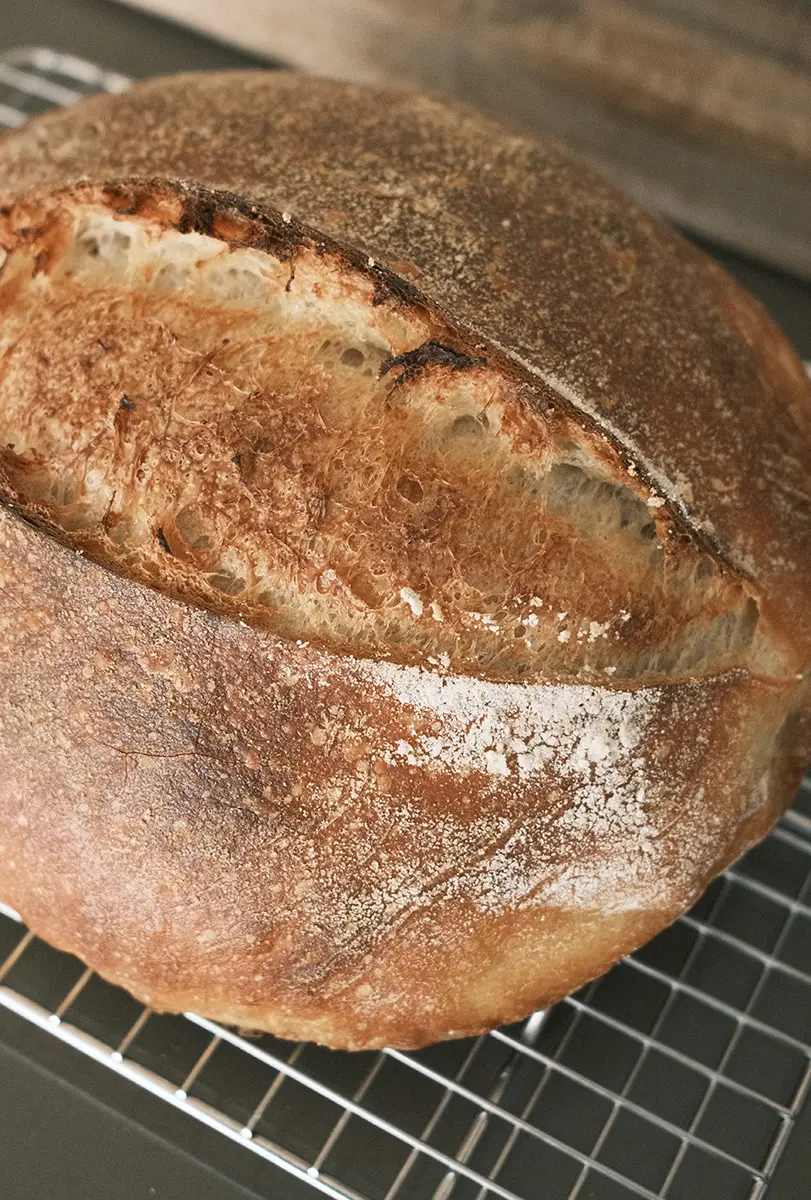
- Carefully turn the dough out onto parchment paper. Score the top with a sharp blade. Transfer to the hot Dutch oven, cover with lid, and bake:20 minutes with lid on20–25 minutes with lid off at 230°C (450°F) Remove the bread when it has a deep golden crust. Let it cool for at least 1 hour before slicing.
Notes
Tips
- Use filtered or dechlorinated water for best fermentation results.
- Ensure your levain is active and bubbly before mixing—do the float test.
- Store the bread in a paper bag or wrapped in a tea towel to preserve the crust.